Engineering
AI as an Overwhelming Security Vector Requires a New Defensive Posture
AI-driven threats are overwhelming security and business processes. Enterprises adopting AI need defensive systems that can evolve at the speed of AI abuse.
At Cinder, we have broad insight into safety trends facing the internet today. We see that AI-driven risks are on the rise. Companies rely on Cinder to protect against AI-created harm, and the danger doesn't stop at user-generated content.
We increasingly see our customers using Cinder to protect against AI-driven fake users, fraudulent (often copyright-violating) media, fraudulent academic credentials and resumes, and sophisticated phishing schemes that target employees as well as customers.
In the new era of AI risk, business processes that are not able to adapt will fail. To find the most vulnerable processes, look first at what doesn't scale.
We experienced this firsthand at Cinder. Our hiring process was overwhelmed by AI-driven fraudulent applicants. This influx ground our hiring to a halt. In response, we adapted our processes: we built defenses and mitigations, and then turned around and shared our learnings with the industry both publicly and through customer advising.
Public institutions are an obvious further target. Claims and objections that would normally require significant time investment can now be submitted in an instant, flooding unprepared organizations that are unable to adapt.
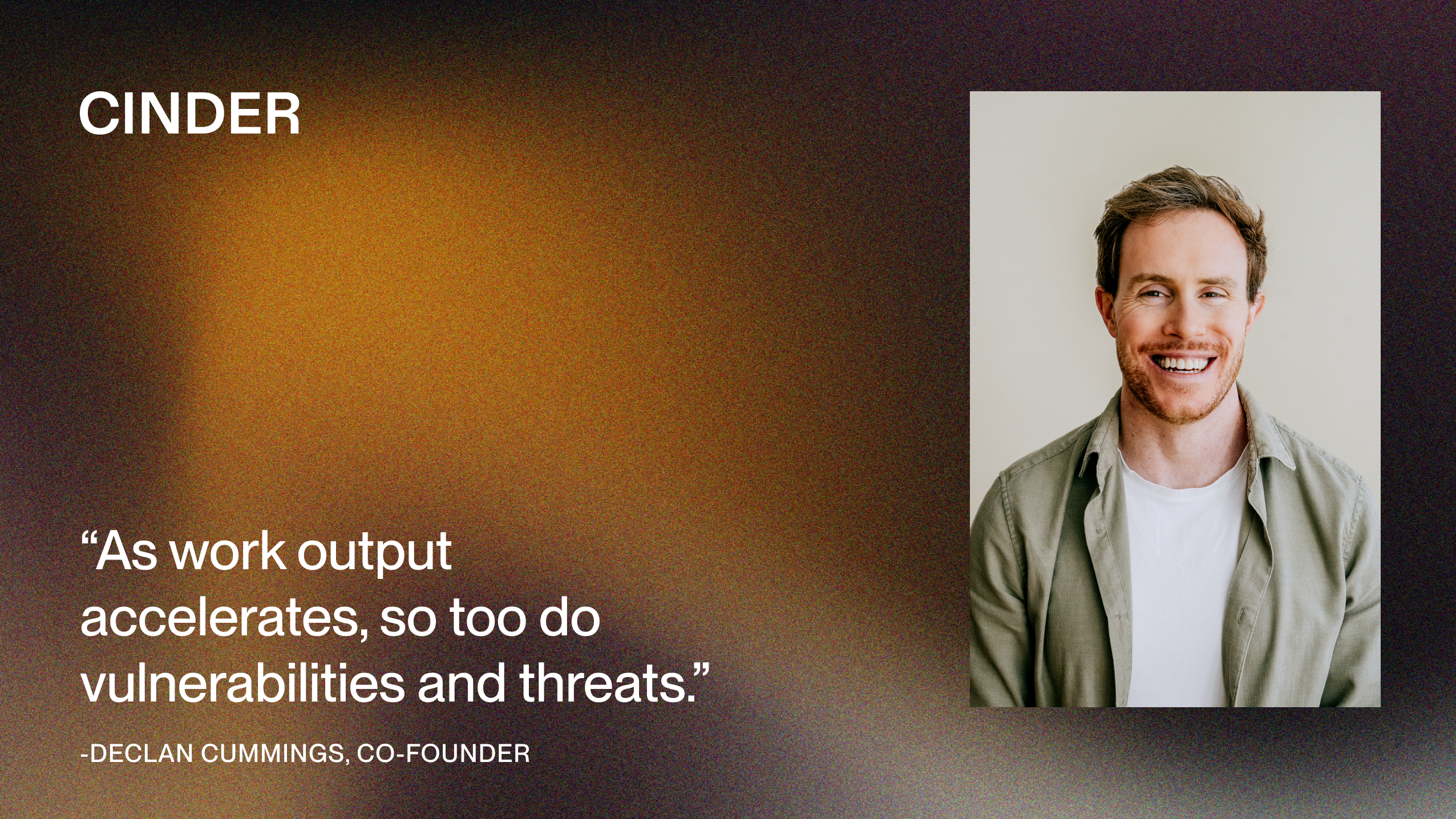
Enterprises adopting AI across workflows take on extraordinary risk, too. As work output accelerates, so too do vulnerabilities and threats. AI adoption must coexist with a stepwise change in security posture.
Unfortunately, enterprises traditionally have focused primarily on the former: AI rollout. As expected, AI incidents are on the rise. Enterprises thus have a choice to make: slow AI rollout, use frontier models as safety valves, or wall off AI by relying on self-hosted open weight models. All carry risks.
- Slow rollout: Enterprises that add checks and guardrails to delay AI adoption will lag behind competitors who move faster.
- Frontier models: Enterprises relying on frontier models risk forfeiting data ownership. Large corporations have been wary of this for some time. Satya Nadella, CEO of Microsoft, warned enterprises against handing over their most sensitive data to AI labs.
- Self-hosted open weight models: Enterprises choosing to wall off their AI use become responsible for maintaining strong security measures against ever-evolving threats, which is expensive and sits outside their area of expertise.
I predict that slowing rollout will be unviable for enterprises that are incentivized to maintain competitiveness, and reliance on AI labs presents clear and immediate risks such that leaders will immediately redirect their companies to option three. Self-hosted open weight models have their own downsides, but security risks are lagging and therefore lack sufficient investment.
Soon, enterprises following Satya's advice will have to reckon with the security implications of their strategy. They must invest in security; traditional security processes must evolve in order to keep pace with the speed of AI threats.
Enterprise security organizations as they exist today may be ill-equipped to handle the volume of AI threats. That's where AI security experts prove valuable: AI safety companies that specialize in evolving AI defenses to counteract AI threats are increasingly essential for enterprises that must maintain their speed advantage.
Cinder has a long history of both protecting against AI threats as well as implementing customer-specific AI defenses for enterprises. We will continue to share research on model developments and safeguards, and we look forward to partnering with more forward-leaning enterprises to improve safe AI rollout.
Read more articles

Who gets to decide when AI is safe?
What Is AI Red Teaming?

AI Safety Is the Goal. Safeguards Are the Work.
The Real AI Safety Problem Is Already Here

Waking Up with a Sense of Pride: Why I Joined Cinder
The Best AI Starts with Human Judgment

AI Has Changed Our Tools, Not Our Standards

What Cinder Learned Red Teaming Alibaba’s Latest Open-Weight Model

Every Child Safety Report Is a Handoff

AI Is Lowering the Barrier to Online Abuse. Platforms Need to Raise Their Defenses.

The Human Cost of a Safer Internet

Navigating Trust and Safety in Online Marketplaces
AI Agents Are Now the Only Way to Moderate Content at Scale

Cinder Joins the Internet Watch Foundation to Help Stop the Spread of Child Sexual Abuse Material

Scaling a team with purpose: Why I joined Cinder

There's No Headcount Solution to AI-Powered Abuse: Introducing Cinder's AI Agent Platform

A Night with Cinder: Know Your Applicant

How the Take It Down Act Will Impact Platforms Handling NCII Compliance

A Night with Cinder: What It Actually Takes to Fight Synthetic NCII