Insights
Scaling a team with purpose: Why I joined Cinder
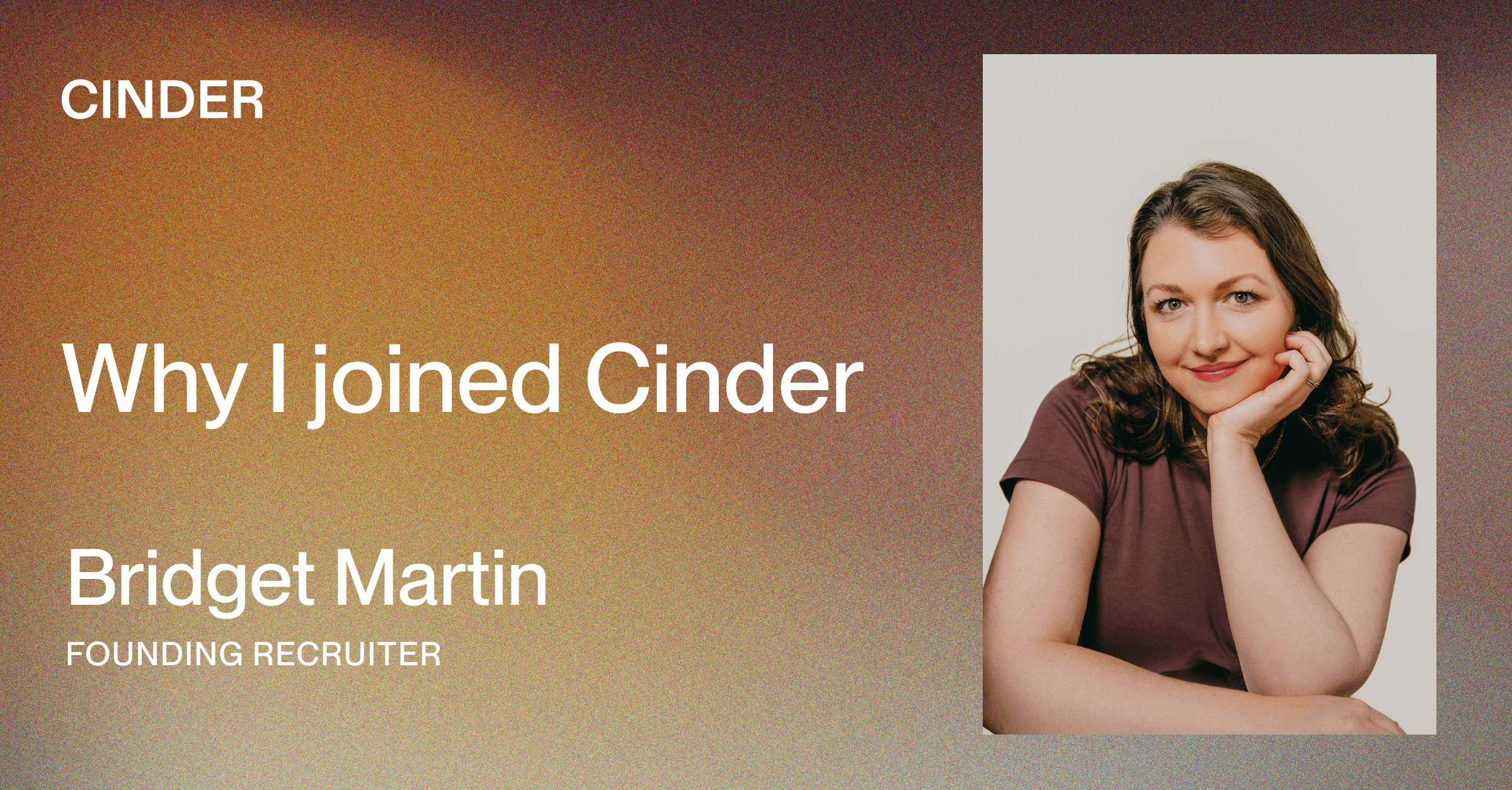
On my first day as Cinder's founding recruiter, the founders walked me through how they got started in this work. They met working on the trust and safety team at Facebook, which made complete sense to me. Anyone who's spent five minutes on Facebook knows there's a tremendous amount of bad stuff happening on the platform at any given moment, and of course a company that size has a massive team dedicated to keeping users safe from it. That part of the story tracked.
“Wait, they need trust and safety?!”
Where my mind really exploded was when they started talking about all the OTHER platforms that needed trust and safety resources: E-commerce marketplaces, video game companies, online fitness communities, open source platforms. Whole categories of products I've used for years without ever once thinking about the fact that they have trust and safety problems, too. I'd genuinely never connected those dots, in part because I've personally never experienced any harm on any of those apps, which made it harder for me to imagine other people having a negative experience. But of course they were. Of course they are.
As co-founder Phil Brennan can attest, my reaction, more than once and out loud, was something like: "Wait, they need Cinder?"
I felt my brain rewiring. If your platform lets users upload anything, or talk to each other, or transact in any way at all, someone has to defend the people using it from the people trying to exploit it. Bullying, scams, NCII, child predators, AI models being manipulated into telling a kid how to hurt themselves. Every app I'd ever opened on my phone suddenly had a hidden layer I'd never thought about, and behind that layer were teams of people doing some of the hardest and most underappreciated work on the internet. I hadn't really known any of this before I joined.
Speed, scrappiness, and shaping culture
The introduction came through a LinkedIn DM, right as I was wrapping up maternity leave with my second daughter. Tina Wu, a former coworker of mine, and one of Cinder’s earliest engineering hires, pinged me to say Cinder was looking for their first in-house recruiter, and my name had come up. I'd spoken to one of Cinder's cofounders a couple of years earlier, as a favor to Tina, back when the company was only about five people. It was the kind of early-stage conversation about which tools to invest in, how to think about agency support versus in-house, and what the first few hires should look like. At the time I hadn’t registered what Cinder did, so after chatting with Tina, I started digging in.
The more I learned, the more things started lining up. I already knew four team members because we’d worked together at a previous startup, and they were all fantastic. Like them, I was coming from public safety software and figured the leap to trust and safety wouldn't be enormous.
The stage of the company was one I knew well and genuinely love. This would be my third sub-30-person startup in the last decade, and there's something about this particular moment in a company's life that I find more energizing than almost anything else in this work: the scrappiness, the speed, the way every hire shapes the culture, the fact that you're convincing people to bet on something that didn't exist in their world a week ago. The shape of what Cinder needed was something I'd lived through before, and the more I sat with it the more I wanted to do it again with this team, and this mission.
Early stage founding principles
The one thing sitting in the back of my mind was whether I was actually ready to jump back into the intensity of this stage. I had a newborn and a toddler at home, and I'd be the only person owning recruiting end to end. I know how demanding building from this point feels, and I didn't want to romanticize it or pretend it would be easy.
My final interview was a ninety-minute walk along the Williamsburg waterfront with Glen, Cinder's co-founder and CEO. Every challenge he described was one I'd been through before, and I had stories from my last two startups that resonated with him, too. The whole thing felt like catching up with someone I'd known for years, not a first-time meeting with a CEO.
One of my non-negotiables when joining an early-stage company is that the founders have to be genuinely inspiring. When things get heavy, and they will, you need a leader with a clear vision and real energy to pull people through. I'd been lucky to have that at my last two startups, and walking back from that waterfront conversation, I knew Glen had it too. By the time the offer came, I was already totally bought in. My husband joked with me that he knew I’d accept from the first conversation I had. Every day since, I've felt strong conviction that this was the right move.
Finding our why: The important reason we do this work.
One extremely challenging part of this work is important to note. We talk about the worst things on the internet every single day. Articles about child predators, AI chatbots harming kids, NCII takedowns, the kind of content most people will never have to think about, let alone look at. Our customers are the trust and safety teams working to protect the internet from these abuses at scale, and our product is what makes it survivable for them. It's heavy, and I won't pretend otherwise.
But it's also the first time in my career that the end-users we're ultimately protecting feel truly universal. Cinder is different. Everyone is on the internet, every single day. Almost everyone I know has, at some point, had a brush with harm on a platform: a scam, a harassing message, a piece of content they wish they hadn't seen. The mission is universally legible in a way I've never experienced before.
The other reason I love being here as our founding recruiter is that I get to help shape who builds the next version of this company. I'm not just filling seats. I'm thinking about the team that twenty Cinder employees from now will look back on as the group that set the bar for everything that came after. Moving fast, making strong calls with imperfect information, convincing brilliant people to bet on a company they hadn't heard of a week ago, and, for the first time in my career, doing all of it with AI tools that didn't exist six months ago, is genuinely fun in a way that's hard to overstate.
If you're reading this because you're considering Cinder, I want you to know what you're actually signing up for. The work is hard, the subject matter is heavy, and the pace is unforgiving. But you'll go home at night knowing exactly what you did and who it was for, which is rarer than it should be. That's why I joined.
Read more articles
The Coolest Job At The Dinner Party: Why I Joined Cinder
AI as an Overwhelming Security Vector Requires a New Defensive Posture
Who gets to decide when AI is safe?
What Is AI Red Teaming?
AI Safety Is the Goal. Safeguards Are the Work.
The Real AI Safety Problem Is Already Here
The Best AI Starts with Human Judgment
AI Has Changed Our Tools, Not Our Standards
What Cinder Learned Red Teaming Alibaba’s Latest Open-Weight Model
Every Child Safety Report Is a Handoff
AI Is Lowering the Barrier to Online Abuse. Platforms Need to Raise Their Defenses.
The Human Cost of a Safer Internet
Navigating Trust and Safety in Online Marketplaces
AI Agents Are Now the Only Way to Moderate Content at Scale
Cinder Joins the Internet Watch Foundation to Help Stop the Spread of Child Sexual Abuse Material
There's No Headcount Solution to AI-Powered Abuse: Introducing Cinder's AI Agent Platform
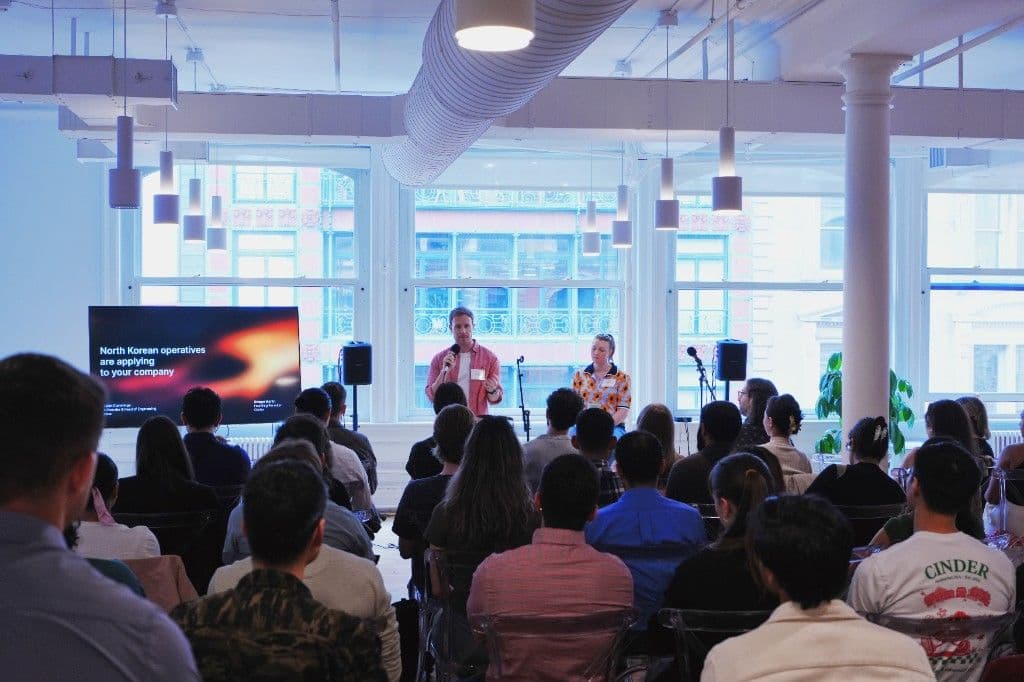
A Night with Cinder: Know Your Applicant
How the Take It Down Act Will Impact Platforms Handling NCII Compliance
A Night with Cinder: What It Actually Takes to Fight Synthetic NCII